Flag football continues its rapid rise as one of the most accessible and exciting versions of American football. Players wear belts with flags that defenders must pull to stop the ball carrier instead of tackling. This simple change removes most contact while preserving the strategy, speed, and skill of the traditional game. With flag football set to debut at the 2028 Los Angeles Olympics and participation numbers climbing nationwide, understanding the official flag football rules has never been more important for players, coaches, parents, and fans.
This guide breaks down the core rules used across major organizations such as NFL FLAG, USA Football, and international federations. It also covers the latest team and player news from the 2026 world championships, key statistics, players to watch, and expert insights.
Understanding the Basics of Flag Football Rules
Most youth, recreational, and competitive leagues follow a similar foundation with small variations by age group and governing body. Games typically feature 5-on-5 or 7-on-7 formats. The 5-on-5 style is the most common for NFL FLAG and is expected to influence Olympic play.
The field is usually smaller than a full tackle football field. A standard NFL FLAG field measures about 50 to 70 yards long by 25 to 30 yards wide, including 8- to 10-yard end zones. A midfield line often serves as the first-down marker.
Possession begins at the offensive team’s own 5-yard line after a coin toss. The offense has four downs to cross midfield. Once past midfield, it receives another four downs to score a touchdown. There are no traditional kickoffs or punts in most versions. If the offense fails to advance, the ball turns over at the spot or at a designated line.
The clock commonly runs continuously for 20 to 40 minutes of game time, stopping only for injuries, timeouts, or the final minutes of halves in some leagues. Each team receives a limited number of timeouts per half.
Scoring in Flag Football
Touchdowns are worth six points. After a touchdown, the scoring team attempts a point-after try. A one-point conversion is usually attempted from the 5-yard line and is often pass-only. A two-point conversion comes from the 10-yard line and allows a run or pass. A safety awards two points to the defense when the ball carrier is flagged in their own end zone.
Interceptions can be returned for touchdowns in most rulesets, adding another layer of excitement.
Flag Pulling, Guarding, and Contact Rules
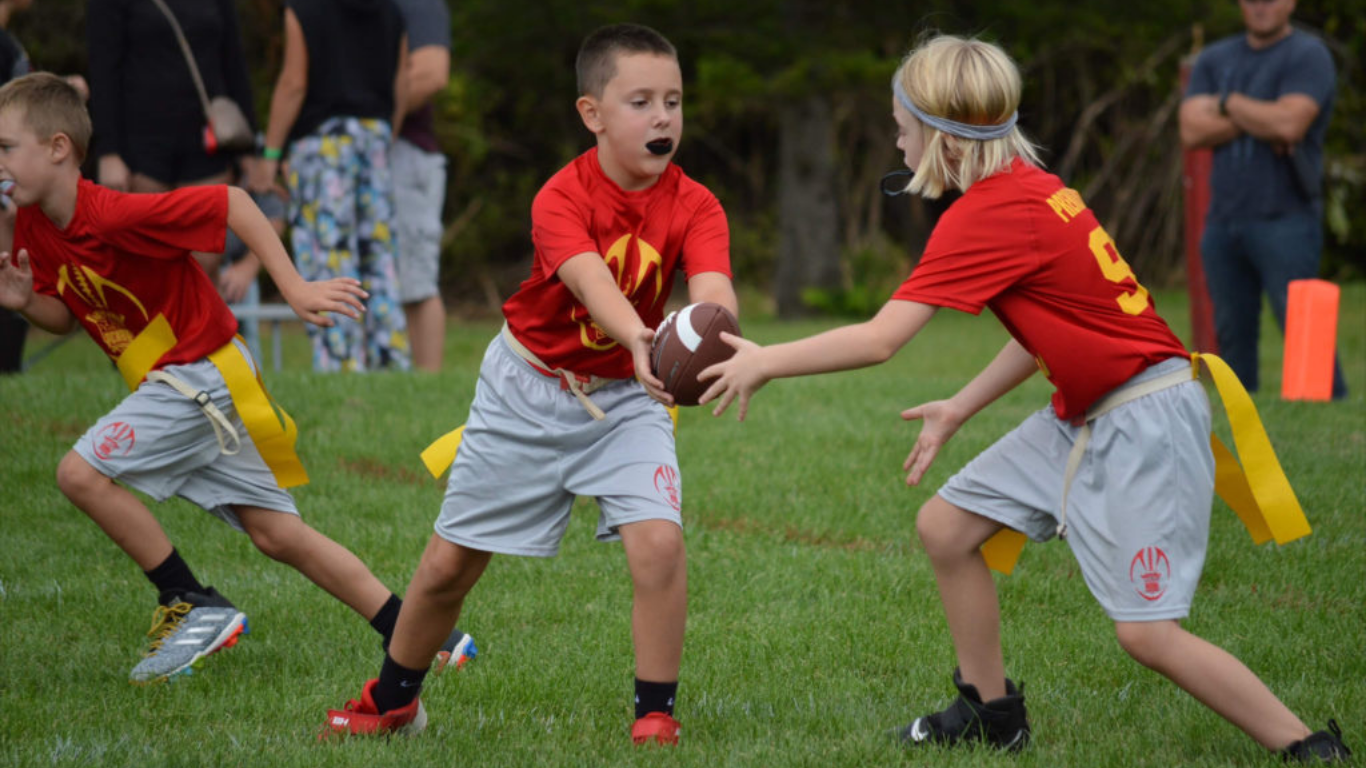
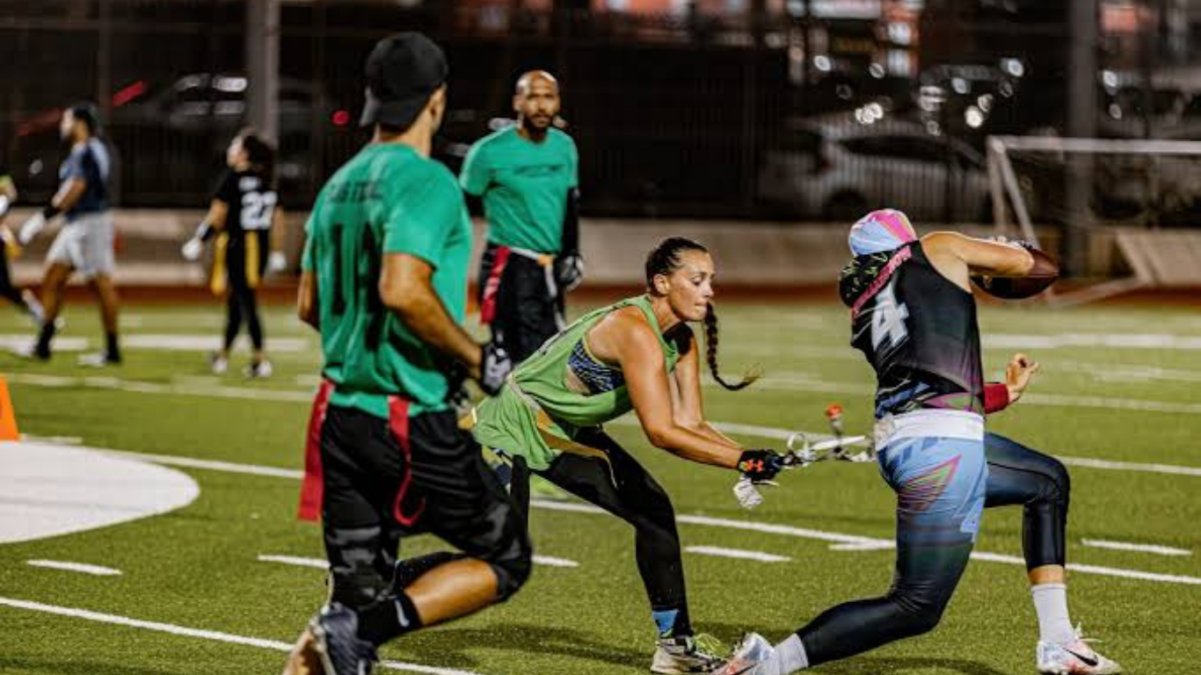
The heart of flag football rules centers on the flags. Each player wears a belt with two or three flags hanging from the hips. A legal flag pull occurs only when the ball carrier has clear possession. Defenders may dive for flags but cannot tackle, hold, push, or run through the runner. Stripping the ball is illegal.
If a flag falls off unintentionally while a player has the ball, the play ends at that spot. Intentionally pulling flags from a player without the ball draws a penalty.
Flag guarding is one of the most common fouls. The ball carrier may not stiff-arm, lower a shoulder, cover flags with hands or the ball, or use any motion that blocks access to the flags. Penalties typically result in a loss of yards and sometimes a loss of down.
Blocking is restricted or banned in many youth and recreational leagues to keep the game non-contact. Some adult or international formats allow limited screening.
Rushers or blitzers often face a delay (commonly a seven-yard rush line) before they can cross the line of scrimmage to pressure the quarterback. Once the ball is handed off or thrown, that restriction lifts.
Latest Player and Team Updates From the 2026 Season
The 2026 IFAF Flag Football World Championships in Düsseldorf, Germany, served as the first major Olympic qualifier. The United States men’s team captured its sixth consecutive world title with a decisive 46-26 victory over Italy in the final. Quarterback Nico Casares threw multiple touchdown passes and embodied the team’s “gold is the only standard” mindset.
On the women’s side, Canada dethroned the previously dominant U.S. squad with a 27-20 win in the gold-medal game, securing both a world title and an Olympic berth. Mexico’s women earned bronze and an Olympic spot with a dramatic 20-19 victory over Great Britain. Canada’s men also qualified by winning bronze after an overtime thriller against Mexico.
Italy’s men and Mexico’s women joined the automatic qualifiers alongside host United States (both genders) and Canada (both genders). Remaining Olympic spots will be decided at the Olympic Q-Series closer to 2028.
Interest from the NFL has surged. More than 200 active NFL players from over 25 countries have expressed interest in competing for their national teams at the 2028 Games. League owners previously approved limited participation, with a maximum of one player per NFL team eligible under current guidelines. Familiar faces could appear alongside dedicated flag specialists.
High school girls’ flag football continues its explosive growth. Participation has jumped dramatically in recent years, with dozens of states now sanctioning the sport at the varsity level. Collegiate programs are expanding rapidly as the NCAA explores championship pathways.
Match Recap: Key Moments From the 2026 World Championships
The U.S. men’s path included a surprising group-stage loss to American Samoa, quarterbacked by Taulia Tagovailoa, brother of NFL star Tua Tagovailoa. That early setback served as a wake-up call. The Americans responded with strong knockout performances and dominated Italy in the final.
Canada’s women displayed composure and defensive intensity to upset the United States. On the men’s side, Guillaume Béland’s overtime interception sealed Canada’s bronze-medal and Olympic-qualifying win. These results highlighted the rising global competitiveness of the sport ahead of its Olympic debut.
Key Statistics Driving Flag Football’s Popularity
Participation numbers underscore the sport’s momentum. Estimates place U.S. flag football players in the multi-millions, with significant year-over-year growth. Core participants who play frequently continue to increase. Girls’ high school participation has risen by hundreds of percent in recent reporting cycles, making it one of the fastest-growing sports for female athletes.
Worldwide, roughly 20 million people play the game. Youth programs through NFL FLAG and similar organizations serve hundreds of thousands of players across all 50 states. The Olympic pathway is expected to accelerate these trends further as national federations invest in development.
Scoring in competitive games often stays high because of the open field and limited contact. Average points per game in elite tournaments frequently exceed those of traditional high school or college football contests due to the continuous offensive opportunities.
Players to Watch Heading Toward 2028
Several standouts from the 2026 worlds merit close attention. Nico Casares remains a leader for the U.S. men with accurate passing and composure under pressure. On the Canadian women’s side, quarterback Sara Parker guided her team to gold and has spoken about the Olympic dream becoming reality. Defensive standouts such as Guillaume Béland demonstrated the game-changing impact of timely flag pulls and interceptions.
Emerging talents from Mexico, Italy, Great Britain, and American Samoa also showed they can compete with traditional powers. As NFL players potentially join national teams, the talent pool will expand even more. Watch for speedsters who excel in open space and quarterbacks who make quick decisions under a delayed rush.
Expert Analysis: Why Flag Football Rules Create an Exciting Product
Flag football rules prioritize skill, speed, and decision-making over size and physicality. The absence of tackling opens the game to a wider range of athletes and reduces injury risk, which appeals strongly to parents and youth programs. The smaller field and limited downs create constant pressure and high-scoring opportunities that keep fans engaged.
International rulebooks, such as those from IFAF, and domestic versions from NFL FLAG and USA Football continue to refine details like no-run zones near the goal line, timeout structures, and equipment standards. These adjustments aim to balance fairness, safety, and entertainment.
Experts note that the Olympic inclusion will force greater standardization while still allowing regional flavor. The delayed rush and strict flag-guarding enforcement reward precise route running and timing rather than pure athleticism alone. As more athletes with traditional football backgrounds enter the sport, the strategic depth will only increase.
FAQs
1. How many players are on the field in flag football?
Most common formats are 5-on-5 or 7-on-7. Youth and recreational leagues often use 5-on-5, while some adult and international games expand to 7-on-7.
2. Are there kickoffs or punts?
In the vast majority of leagues, no. Possession starts at the 5-yard line, and failed drives result in a turnover on downs without a kick.
3. What happens if a flag falls off accidentally?
The ball carrier is considered down at the spot where the flag came off, provided they have possession.
4. Can the quarterback run with the ball?
Rules vary. Many leagues allow it outside designated no-run zones near midfield or the goal line. Some youth divisions restrict runs more heavily.
5. Is blocking allowed?
Blocking is prohibited or heavily restricted in most non-contact versions to maintain safety. Limited screening may appear in certain adult formats.
Conclusion
Flag football rules create a dynamic, inclusive, and high-energy version of America’s favorite sport. From the fundamental mechanics of flag pulls and scoring to the latest Olympic qualification drama, the game rewards speed, precision, and teamwork. With the 2028 Los Angeles Games on the horizon and participation surging at every level, now is the perfect time to learn the rules, follow the top teams, and get involved. Whether you are a parent signing a child up for NFL FLAG, a high school athlete, or a fan preparing for Olympic coverage, mastering these flag football rules will deepen your appreciation of this rapidly evolving sport. The future of football is flying high—and the flags are ready to be pulled.