
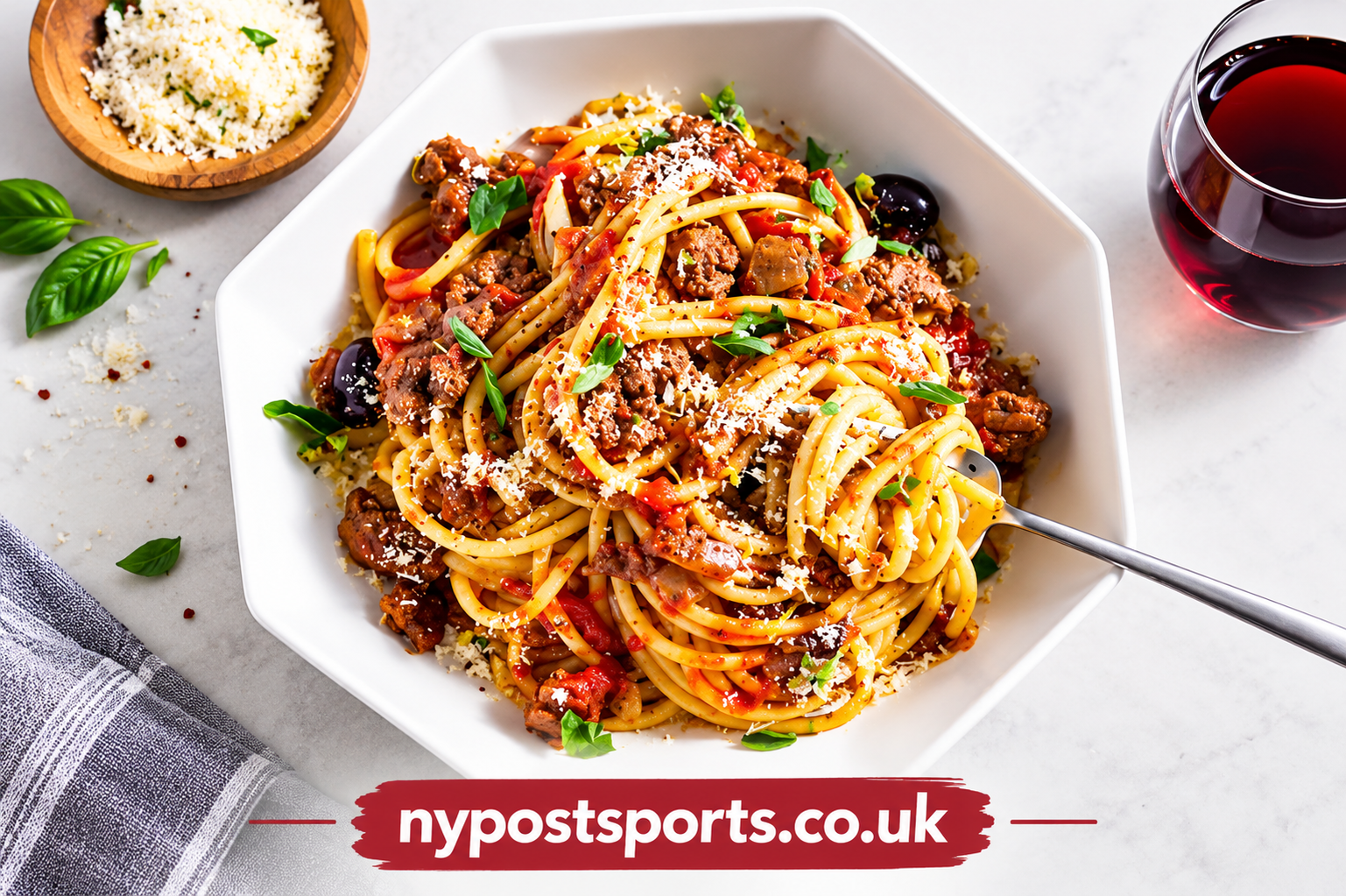
At first glance, it looks like thick spaghetti. Look closer, and you’ll see a tiny hole running through its center, a detail that changes how it cooks, how it holds sauce, and how it feels on the plate. In this article, we’ll explore where bucatini pasta came from, what its name really means, and why so many people feel a quiet affection for it.
Where Did Bucatini Pasta Come From? The Origins
Bucatini pasta is most closely associated with Lazio, the region around Rome, and with the rustic cooking of central Italy. Like many traditional pastas, it has no single recorded inventor. It grew out of everyday kitchens, shaped by farmers, shepherds, and home cooks who needed filling meals from simple ingredients.
Historically, hollow pasta was made by wrapping dough around a thin rod or reed, which created the signature channel. Over time, pasta makers developed bronze dies that pushed dough through a form with a pin at the center, producing the hollow strand we know today.
The result was a noodle that felt substantial yet surprisingly light, and it quickly became a staple in Roman and central Italian homes.
What Does the Name Bucatini Mean?
The name tells you almost everything. Bucatini comes from the Italian word buco, meaning “hole,” and the ending -ini suggests something small. Put together, it roughly means “little holes.”
In some parts of Italy, especially in the south, you may also hear the name perciatelli, which comes from the verb forare or pierced in older dialect forms. Both names point to the same idea: a strand of pasta that has been pierced through the middle.
This small detail matters. The hollow center lets sauce slip inside, so each bite delivers flavor from both the outside and the inside of the noodle. A name that simple carries real culinary purpose.
The Bucatini Pasta Family: Related Shapes and Classic Pairings
No pasta stands alone. Bucatini sits within a large family of long, extruded shapes, and understanding its relatives helps you cook it better. Here are the closest members of the family:
- Spaghetti: The thinner, solid cousin, and the most common substitute.
- Perciatelli: Another name for bucatini, often slightly thicker.
- Spaghettoni: A thick, solid strand that behaves like heartier spaghetti.
- Ziti and Candele: Longer or shorter hollow tubes, usually broken before cooking.
- Maccheroni: A broader family of hollow pastas that shares the same spirit.
Classic dishes tie the family together. Bucatini all’Amatriciana, with tomato, guanciale, and pecorino, is the most famous pairing. Cacio e pepe and carbonara work beautifully too.
How People Reacted: The Public Love for Bucatini Pasta
For years, bucatini was a beloved but somewhat niche choice outside Italy. Then home cooks and chefs began to rediscover it, and its popularity grew steadily.
People praised its chewy bite and its ability to cling to rich sauces. Food writers called it a “thinking person’s spaghetti,” while social media filled with recipes, photos, and friendly debates about the best way to eat it without splashing sauce on your shirt.
The reaction has been warm, affectionate, and a little playful. Few pasta shapes inspire this kind of loyalty. People don’t just like bucatini; they defend it.
The Human Side: Why Bucatini Feels Like Home
Beyond technique and tradition, bucatini carries something harder to measure: feeling. For many families, a pot of boiling water and a box of pasta marks the end of a long day, a Sunday gathering, or a quiet dinner after hard news.
Bucatini adds a little ceremony to that ritual. It asks you to slow down, twirl carefully, and enjoy the slurp. Parents pass the habit on to children, and friends laugh together over sauce-splattered napkins.
In that sense, bucatini pasta is not only food. It’s a reminder that comfort often arrives in the simplest shapes.
Why Do People Search for Bucatini Pasta?
The curiosity around bucatini pasta usually comes from a few common questions. People want to know how to cook it properly, what sauce suits it best, and how it differs from spaghetti.
Others search because they can’t find it in a nearby store, or because they saw a dish online and wanted to recreate it. Some are simply drawn by its unusual look and want to understand the story behind the hole.
Searches also spike around classic Roman recipes, since bucatini is central to dishes like amatriciana. In short, people search for bucatini pasta because it sits at the intersection of curiosity, comfort, and good cooking.
Final Thoughts
Bucatini pasta may look humble, but it carries centuries of kitchen wisdom in a single strand. Its name celebrates a tiny hole, its shape rewards patience, and its flavor brings people to the table.
The next time you twirl a forkful, remember the home cooks who shaped it and the families who kept it alive. Good food connects us to others, and sometimes the smallest detail, like a hole through the middle, holds the biggest story.
Must Read: Debbie Rowe Net Worth: The Untold Story of Her Life, Family, and Journey Beyond Michael Jackson
FAQs
Why does bucatini pasta have a hole in the middle?
The hollow center lets sauce flow inside the noodle. It also helps the pasta cook more evenly, so every bite carries flavor inside and out.
Is bucatini pasta healthier than spaghetti?
Nutritionally, the two are almost identical, since both are made from durum wheat semolina. The real difference is texture: bucatini is chewier and more filling, so smaller portions often feel satisfying.
How do you eat bucatini without making a mess?
Twirl only a few strands at a time against a large spoon or the side of the bowl. Thicker, clingy sauces like amatriciana also splash less than thin, watery ones.
Why does bucatini sometimes cook unevenly?
Water can get trapped in the hollow center, leaving the middle slightly firmer than the outside. Stir often in a large pot and taste a strand a minute early to get it just right.
Where can I buy good bucatini pasta?
Look for bronze-cut dried bucatini in Italian grocers, well-stocked supermarkets, or online. The rougher surface from bronze dies helps sauce stick much better.