
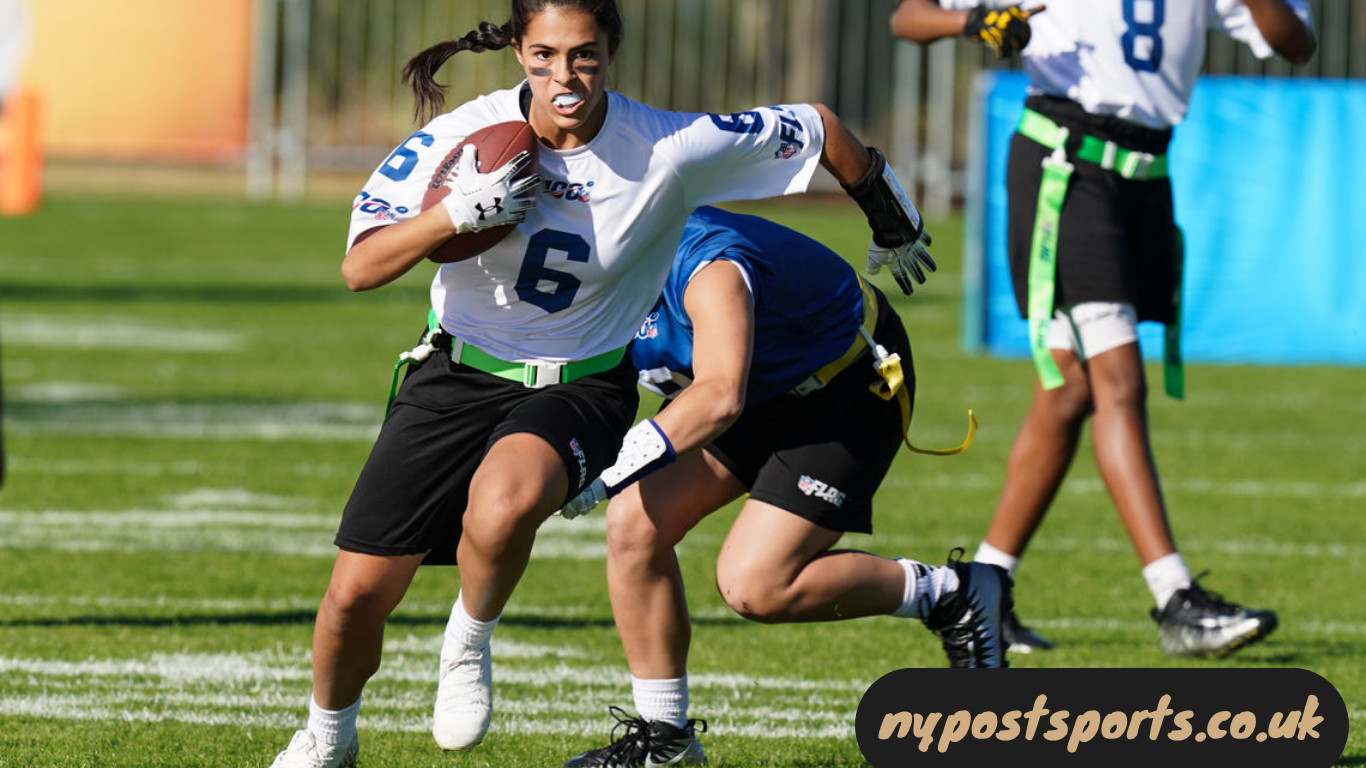
Flag football is exploding across the United States and around the world. With its debut at the 2028 Los Angeles Olympics locked in and participation numbers climbing into the millions, more players, parents, and fans than ever want to understand the game’s unique structure. At the heart of every successful team sit the specialized flag football positions—roles that look familiar to tackle football fans yet operate under completely different rules and demands.
Unlike traditional football, flag football eliminates tackling and most blocking. Players wear flags at the waist, and a play ends when a defender pulls a flag. The result is a fast, open, skill-based game built on speed, timing, route-running, and decision-making. Understanding the positions is the first step to playing smarter, coaching better, or simply following the action as the sport races toward its Olympic moment.
What Are the Core Flag Football Positions?
Most youth and adult leagues, including the popular NFL FLAG format, play 5-on-5. Some competitions use 7-on-7 or other variations. The exact numbers shift, but the core roles remain consistent.
Offensive Flag Football Positions
Quarterback (QB)
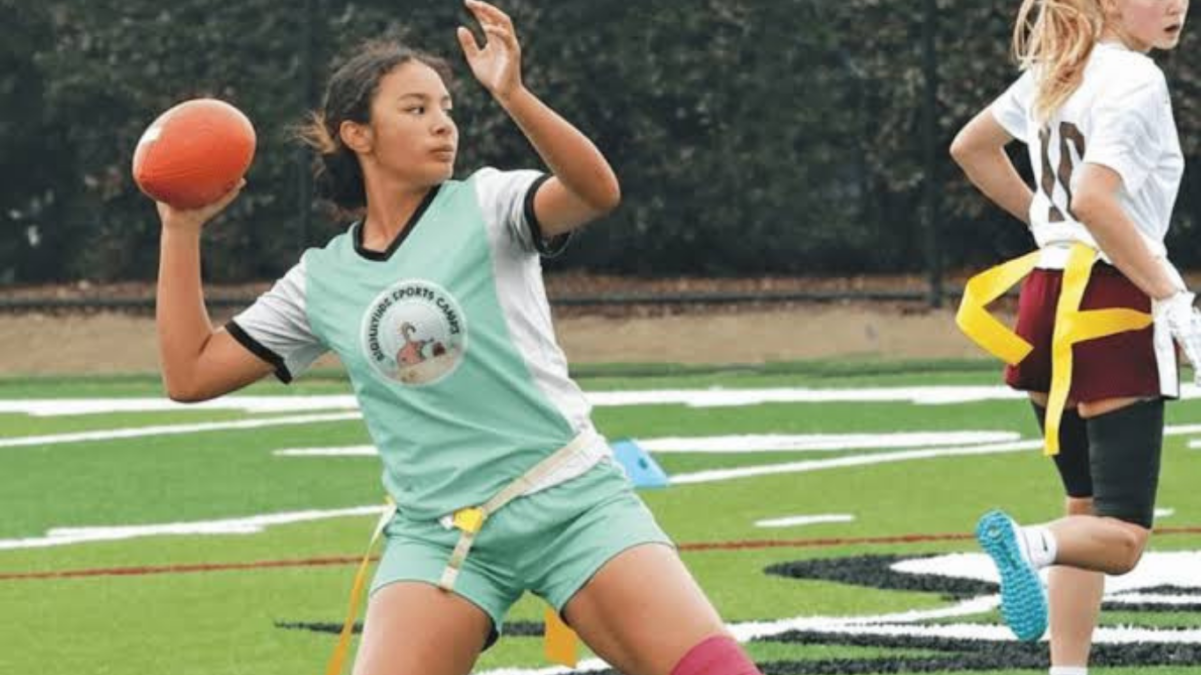
The quarterback is the field general. After receiving the snap, the QB reads the defense, delivers accurate passes, or hands the ball off. In many leagues the quarterback cannot run with the ball immediately after the snap, forcing quick decisions and precise throws under pressure from the rusher. Mobility still matters—good QBs buy time with footwork and vision.
Center
The center snaps the ball (often shotgun style) and then immediately becomes an eligible receiver. This is one of the biggest differences from tackle football. A skilled center runs short routes, creates easy completions, and acts as a safety valve. Clean snaps are non-negotiable; a bad snap often ends the play before it starts.
Wide Receivers
Teams typically field two or three wide receivers who run precise routes—slants, posts, outs, and crosses—to get open. Speed, sharp cuts, and reliable hands define the position. With limited contact, receivers must create separation through technique rather than physical dominance.
Running Back (when used)
Some formations include a running back who takes handoffs, catches short passes out of the backfield, or provides an extra receiving option. Elusiveness matters more than power because defenders only need to pull a flag.
Defensive Flag Football Positions
Rusher
The rusher is flag football’s specialized pass-rusher. Rules usually require the rusher to start seven yards off the line of scrimmage. Once the ball is snapped, the rusher attacks the quarterback to force hurried throws or pull the flag. Timing and closing speed separate average rushers from elite ones.
Defensive Backs
Defensive backs cover receivers in man-to-man or zone schemes. They must mirror routes, read the quarterback’s eyes, and make clean flag pulls. Quick feet and anticipation are essential.
Safety
The safety plays deeper and serves as the last line of defense. This player prevents big plays, helps over the top on deep routes, and cleans up when receivers break free.
In 7-on-7 formats the roster expands with additional receivers and defensive backs, but the same principles apply. Players often rotate between offense and defense, making versatility a major asset.
Latest Player and Team Updates: Olympic Momentum Builds
Flag football’s biggest story in 2026 is its rapid rise toward the Olympics. At the IFAF World Flag Football Championships held in Düsseldorf, Germany, in mid-August 2026, the United States men’s team successfully defended its title with a 46-26 victory over Italy, claiming a sixth consecutive world championship. The U.S. women fell short of a fourth straight title, losing 27-20 to Canada in the final. Mexico’s women and Canada’s men also secured qualification spots for the 2028 Los Angeles Games.
The NFL has taken notice. League executives reported that more than 200 NFL players from over 25 countries have expressed interest in competing for their national teams in 2028. Team owners previously approved a resolution allowing players to participate, with more details expected after the 2026-27 season. National federations will handle selection.
Youth and high school participation continues to surge. Girls’ high school flag football participation has grown dramatically, with nearly 69,000 athletes competing in recent seasons across expanding state sanctioning. Overall U.S. participation has reached millions of players, with strong growth in both boys’ and girls’ programs.
Key Statistics Highlighting Flag Football’s Growth
- Roughly 7.8 million Americans played flag football in recent tracking periods, with 2.7 million considered core participants.
- Girls’ high school participation jumped hundreds of percent in just a few years, reaching nearly 69,000 athletes.
- NFL FLAG serves hundreds of thousands of youth players across thousands of leagues.
- The sport is played in more than 100 countries, with record numbers of national teams at recent world championships.
- Olympic qualification and professional league plans from the NFL signal sustained investment.
These numbers show flag football is no longer a niche alternative. It is becoming a mainstream pathway for athletes of all ages and skill levels.
Players to Watch
Keep an eye on established national-team standouts and crossover talent. U.S. men’s quarterback Nico Casares delivered key touchdown passes in the recent world title run and embodies the modern dual-threat style adapted to flag rules. On the women’s side, Canadian and Mexican players who claimed titles or Olympic spots demonstrated elite route-running and defensive instincts.
NFL names generating buzz include those who have publicly expressed Olympic interest, though traditional tackle stars often discover that flag football demands different timing and open-field skills. Youth phenoms emerging from NFL FLAG national championships and high school programs are also worth tracking as the talent pipeline deepens ahead of 2028.
Expert Analysis: Why Positions Matter More Than Ever
Coaches and former players emphasize that flag football rewards understanding every role, not just specializing early. Because most players switch between offense and defense, learning multiple positions builds football IQ. The center’s dual duty of snapping and receiving creates matchup problems that smart teams exploit. The rusher’s seven-yard rule forces offenses to operate with a built-in clock, rewarding quick-release quarterbacks and precise timing routes.
Experts note that the absence of an offensive line shifts emphasis entirely to skill positions. Success depends on spacing, timing, and flag-pulling technique rather than size or strength. As the Olympic format settles on five-on-five, teams that master these specialized roles will hold a clear advantage. The recent world championships already showed rising competitiveness from non-traditional powers, proving the global talent base is expanding rapidly.
FAQs
1. How many players are on the field in flag football?
Most common formats are 5-on-5 (NFL FLAG style) or 7-on-7. Olympic competition will use five-on-five.
2. Can the quarterback run with the ball?
Rules vary by league. In many youth and NFL FLAG games the quarterback cannot run immediately after the snap and must pass or hand off first.
3. What makes the center different in flag football?
The center snaps the ball and then becomes an eligible receiver, running routes and catching passes—unlike the primarily blocking role in tackle football.
4. Who is allowed to rush the quarterback?
Typically only one designated rusher, who must start a set distance (often seven yards) from the line of scrimmage.
5. Are there linemen in flag football?
No. Flag football has no traditional offensive or defensive linemen because blocking and tackling are prohibited or heavily restricted.
Conclusion
Mastering flag football positions unlocks the sport’s unique blend of strategy, athleticism, and accessibility. From the decision-making of the quarterback and the dual role of the center to the pressure applied by the rusher and the coverage provided by defensive backs, every position contributes to a game built on speed and skill rather than collision. With the 2028 Olympics on the horizon, record participation numbers, and growing professional interest, now is the perfect time to learn the roles, follow the rising stars, and join the fastest-growing version of football. Whether you are a player choosing a position, a coach designing schemes, or a fan preparing for Olympic coverage, understanding these positions puts you ahead of the game.