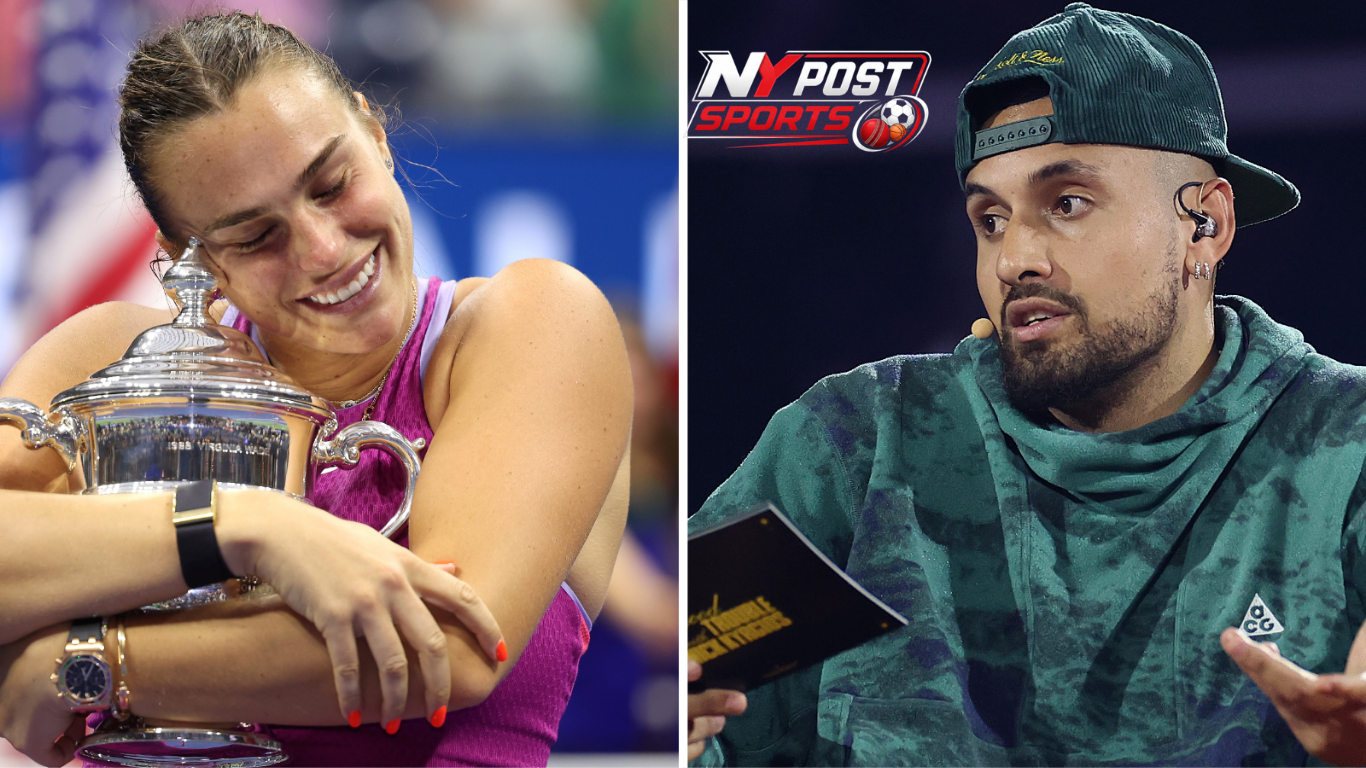
When Nick Kyrgios faced Aryna Sabalenka in Dubai on 28 December 2025, the tennis world paid close attention. Billed as a contemporary “Battle of the Sexes,” the exhibition match recalled Billie Jean King’s famous 1973 victory over Bobby Riggs while sparking fresh debate about spectacle, equality and the future of the sport. Kyrgios won 6-3, 6-3 under modified rules, yet the contest raised more questions than it answered. Interest in Kyrgios vs Sabalenka stems from the contrast between a flamboyant, injury-hit Australian showman and the powerful, dominant women’s world number one.
Both players arrived with substantial achievements and public profiles. Their encounter offered entertainment, controversy and a rare mixed-gender stage that few elite players would accept.
Early Life and Background
Nick Kyrgios was born Nicholas Hilmy Kyrgios on 27 April 1995 in Canberra, Australia. His father, George, is of Greek descent and worked as a house painter; his mother, Norlaila (Nill), was born into a Malaysian royal family but relinquished her title after moving to Australia and later worked as a computer engineer. Kyrgios has an older brother, Christos, and sister, Halimah. He attended Radford College and later Daramalan College. As a child he excelled at basketball before concentrating fully on tennis at around the age of 14. He received a scholarship to the Australian Institute of Sport and developed into a world-number-one junior, winning the 2013 Australian Open boys’ singles title.
Aryna Sabalenka was born on 5 May 1998 in Minsk, Belarus. Her father, Sergey, was a former ice-hockey player who introduced her to tennis almost by chance when she was six; her mother is Yulia. She has a younger sister. Sabalenka trained at the National Tennis Academy in Minsk and, unusually, competed mainly on the professional circuit rather than junior Grand Slams. Her early path was less conventional than many future champions, yet it laid the foundation for a powerful, aggressive game.
Both found tennis through family influence and local opportunities, though their routes diverged sharply once they turned professional.
Career and Rise to Fame
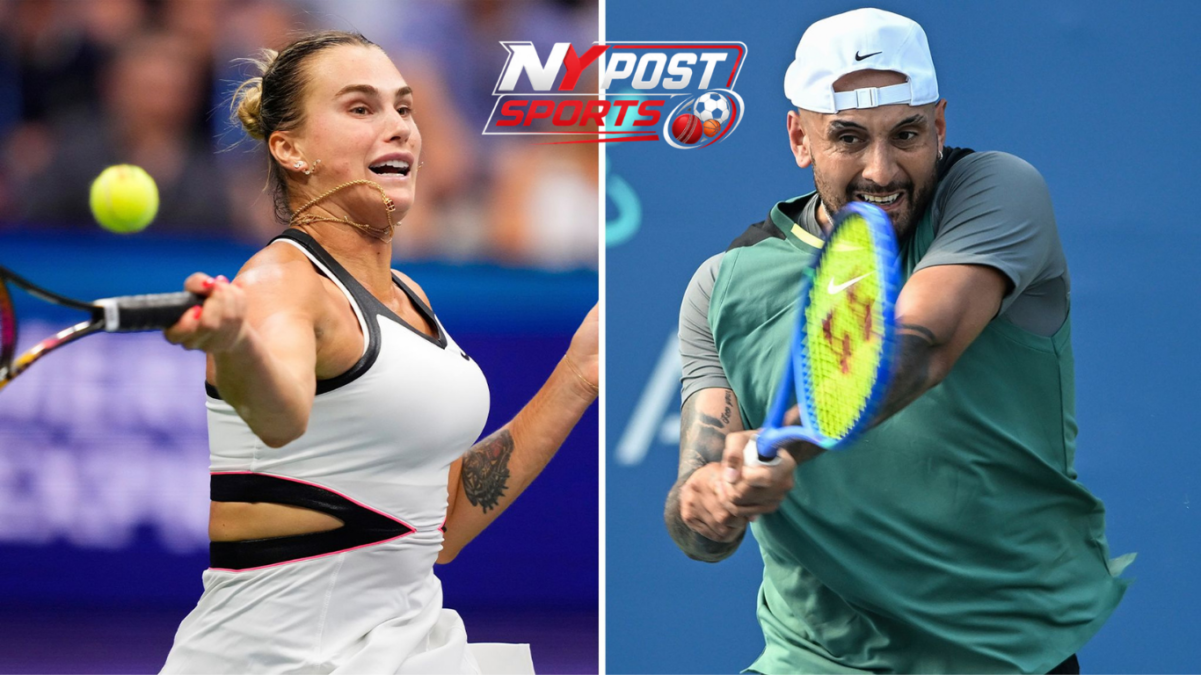
Kyrgios turned professional in 2013. His breakthrough came at Wimbledon in 2014 when, ranked outside the top 140, he defeated then-world number one Rafael Nadal to reach the quarter-finals. He has won seven ATP singles titles and reached a career-high ranking of world number 13 in 2016. In 2022 he reached the Wimbledon final (losing to Novak Djokovic) and won the Australian Open doubles title with Thanasi Kokkinakis. Known for his powerful serve, flair and unpredictable shot-making, he has also attracted attention for on-court behaviour and outspoken comments.
Sabalenka turned professional around 2015 and rose steadily. She has won four Grand Slam singles titles—two Australian Opens and two US Opens—along with numerous WTA titles. By the end of 2025 she was the women’s world number one for a second consecutive season, having claimed the US Open among other titles that year. Her game is built on raw power, a strong serve and aggressive baseline play. She has also succeeded in doubles, reaching world number one in that discipline earlier in her career.
Their reputations differ: Kyrgios is often described as a talented entertainer whose career has been interrupted by injury and controversy; Sabalenka is widely regarded as one of the most consistent and dominant players of her generation.
Personal Challenges or Turning Points
Kyrgios has faced significant physical setbacks. Wrist and knee injuries limited him to only a handful of competitive singles matches in the three years leading up to the Dubai exhibition, dropping him to a ranking in the 600s. He has also dealt with off-court issues, including a 2023 guilty plea to a charge of common assault relating to an incident with a former partner (the charge was later dismissed). These episodes have shaped public perception and his own reflections on maturity.
Sabalenka suffered a profound personal loss when her father died suddenly of meningitis in 2019. She has spoken of channeling that grief into motivation and has worked through periods of form fluctuation, particularly with her serve in earlier years. Both players have demonstrated resilience—Kyrgios by continuing to seek competitive opportunities, Sabalenka by converting adversity into sustained excellence at the highest level.
Personal Life
Publicly confirmed details remain limited. Kyrgios has spoken about personal growth and maintains a close relationship with his family. Sabalenka has been in a relationship with Brazilian entrepreneur Georgios Frangulis in recent years and remains close to her mother and sister. Neither player has extensively detailed private family life beyond these points, and reliable sources confirm no further verified information about marriage or children for either.
Later Career and Current Activities: The Dubai Encounter
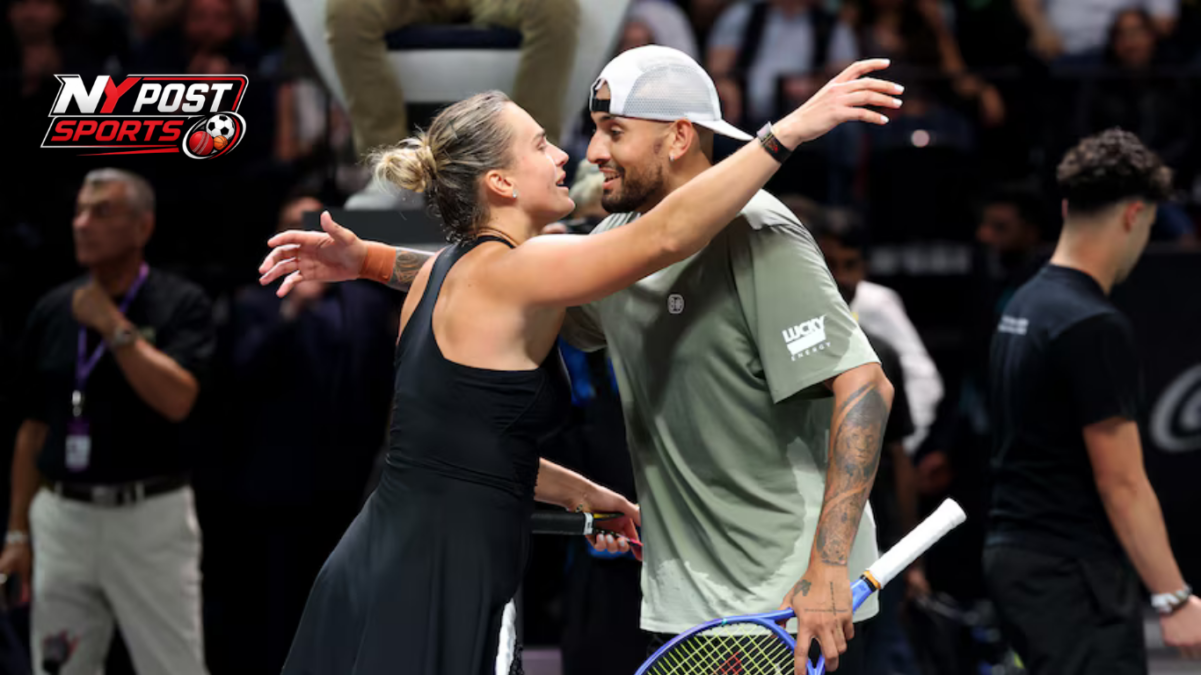
By late 2025 Kyrgios was preparing for a potential full return in 2026, while Sabalenka was coming off a dominant season. Their “Battle of the Sexes” match at Dubai’s Coca-Cola Arena used adapted rules: Sabalenka’s side of the court was reduced by nine per cent and both players were restricted to one serve per point. These changes were intended to narrow the physical gap. Kyrgios prevailed 6-3, 6-3 in roughly 70 minutes. He used variety, including drop shots and underarm serves, while Sabalenka produced powerful groundstrokes and briefly led in the second set before the Australian closed out the contest.
Reactions were mixed. Critics argued the event risked trivialising women’s tennis and lacked the cultural weight of the 1973 original. Supporters, including both players, maintained it generated visibility and entertainment. Kyrgios called it “a great stepping stone forward for the sport of tennis” and praised Sabalenka’s competitiveness. Sabalenka described it as a hard fight, said she enjoyed the experience and later expressed interest in a rematch for “revenge.” Both were represented by the same agency, which organised the exhibition. Appearance fees were not publicly disclosed, though reports suggested significant compensation without on-court prize money.
In the months that followed, Sabalenka continued her campaign at the highest level while Kyrgios focused on fitness and a possible comeback pathway.
Quick Bio
| Detail | Nick Kyrgios | Aryna Sabalenka |
| Full Name | Nicholas Hilmy Kyrgios | Aryna Siarhiejeŭna Sabalenka |
| Date of Birth | 27 April 1995 | 5 May 1998 |
| Place of Birth | Canberra, Australia | Minsk, Belarus |
| Nationality | Australian | Belarusian |
| Profession | Professional tennis player | Professional tennis player |
| Years Active | 2013–present | 2015–present |
| Known For | Wimbledon final 2022, flair, serve | Four Grand Slam titles, world No. 1 |
| Estimated Net Worth | Approximately $8–12 million | Approximately $22–30 million |
Figures for net worth are estimates drawn from publicly reported prize money and sponsorship analyses and should be treated as approximate.
Legacy and Lasting Impact
The Kyrgios vs Sabalenka match will be remembered less for its result than for the conversation it provoked. It highlighted ongoing discussions about gender differences in sport, the value of exhibition events, and how high-profile athletes choose to use their platforms. Kyrgios remains a polarising yet gifted figure whose talent has always outpaced his consistency. Sabalenka stands as a symbol of modern power tennis and sustained excellence. Together they showed that tennis can still command attention beyond traditional tournament structures, even when the format invites scrutiny.
Their careers also illustrate contrasting paths to the top: one marked by early brilliance and interruption, the other by steady accumulation of major titles. Both continue to influence the sport—Kyrgios through personality and shot-making, Sabalenka through results and presence.
Conclusion
The Kyrgios vs Sabalenka encounter in Dubai offered a snapshot of two distinctive tennis personalities at different stages of their journeys. While the modified rules and exhibition setting limited direct comparisons with regular tour matches, the event succeeded in drawing global eyes to the sport. Whether it advances equality debates or simply provides entertainment remains a matter of perspective. What is clear is that both players left the court with mutual respect and a willingness to revisit the idea.